
Mobile Slots Without GamStop
 Available in GB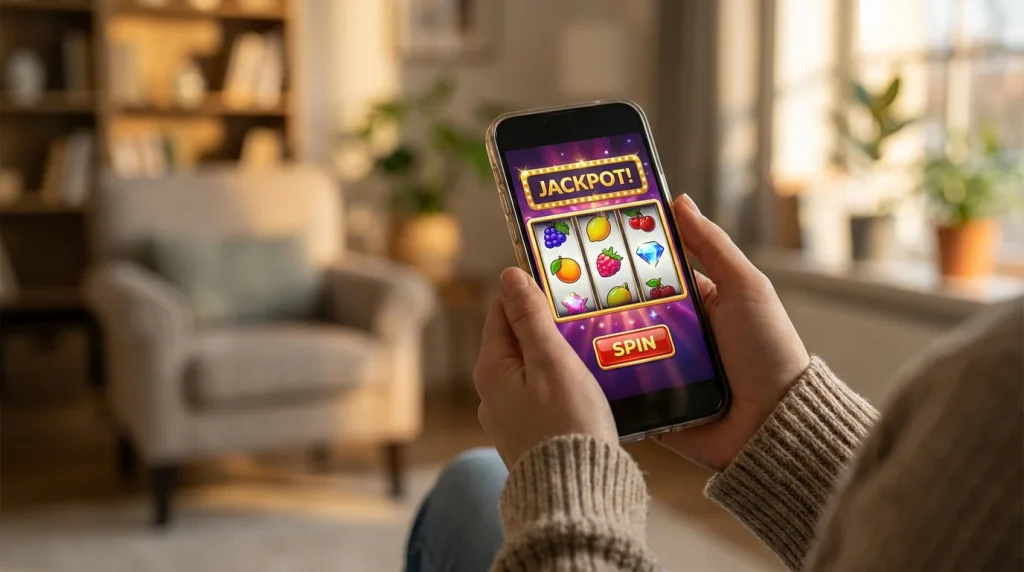
Most slot sessions now happen on phones rather than desktops. The shift reflects how people actually live: commuting, waiting, filling spare moments with entertainment that fits in a pocket. Non-GamStop casinos have adapted accordingly, with mobile experiences that match or exceed their desktop equivalents. The same games, bonuses, and features work through touchscreens without compromise.
This guide covers how mobile slot play works at offshore casinos, compares browser and app approaches, identifies games that perform best on smaller screens, and explains how to optimise your device for the smoothest possible experience.
Browser Play vs Casino Apps
Browser-based play dominates non-GamStop mobile gambling. Most offshore casinos deliver their entire platform through mobile web browsers without requiring app downloads. Navigate to the casino URL on your phone, log in, and play. The experience mirrors desktop browsing scaled for touchscreens.
HTML5 technology enables this browser approach. Modern slots render natively in web browsers without Flash or other plugins, as Adobe ended support for Flash Player on 31 December 2020. The same game code runs across devices, automatically adjusting layout for screen dimensions. Developers build once and deploy everywhere, which explains why browser compatibility became the industry standard.
Dedicated apps exist at some offshore casinos but remain less common than UK-licensed equivalents. App store policies complicate distribution of gambling apps, particularly for offshore operators. Google Play restricts real-money gambling apps in many regions. Apple’s App Store maintains strict requirements that some offshore operators cannot meet.
Direct download apps bypass app stores entirely. Some casinos offer APK files for Android that install outside Google Play. These apps function identically to browser play but provide home screen icons and potentially smoother performance. Installing requires enabling unknown sources in device settings, which some users avoid for security reasons.
Browser bookmarks create app-like shortcuts without actual installation. Adding a casino site to your home screen produces an icon that launches directly to the lobby. Progressive web app technology at some casinos makes these bookmarks function nearly identically to native apps, including offline capability for cached content.
The practical difference between browser and app play has diminished substantially. Performance, features, and game selection match across both approaches at casinos supporting both. Choose based on convenience rather than expecting meaningful quality differences.
Best Slots for Mobile Play
Games designed mobile-first perform better than desktop ports adapted for smaller screens. Developers increasingly prioritise mobile during design, creating interfaces that feel native to touch interaction rather than retrofitted. Pragmatic Play, for instance, builds all new releases with mobile as the primary platform.
Simple interfaces suit small screens better than complex layouts. Slots with clean designs, large buttons, and uncluttered displays translate well to phone screens. Games featuring elaborate dashboards with numerous statistics and controls can feel cramped on mobile, requiring zooming or scrolling that interrupts flow.
Portrait mode compatibility matters for one-handed play. Some slots only function in landscape orientation, demanding two-handed grip and reduced portability. Games supporting portrait mode allow discrete play holding your phone naturally. Check orientation support before committing to games you plan to play frequently on mobile.
Starburst exemplifies mobile-friendly design despite predating the mobile-first era. The simple mechanics, clear symbols, and straightforward interface scale perfectly to any screen size. The game loads quickly and runs smoothly even on older devices.
Gates of Olympus and other cluster-pay games work well on mobile because winning combinations highlight clearly across the grid. The visual feedback suits touchscreens, and the tumble mechanics create engaging animation without overwhelming smaller displays.
Megaways slots present mixed mobile experiences. The variable symbol counts and complex win calculations require information display that can crowd phone screens. Some implementations handle this elegantly; others feel cluttered. Testing specific Megaways games on your device reveals which handle the format gracefully.
Our top casino picks for the UK
- BritsinoBonus: Welcome Package – Get your £2,200 + 2,000 FS · Payout speed: 1-3 business days
- WinBeastBonus: €5000 + 500 FS + €650 Freebet · Payout speed: 1-3 business days
- EvoSpinBonus: 125% up to €2500 + 125 Free Spins · Payout speed: 1-3 business days
- NightLuckBonus: Welcome Pack + 805% Up To 6400€ + 280 FS · Payout speed: 1-3 business days
- DieselwinBonus: Welcome Pack 250% up to £4000 + 200 FS · Payout speed: 1-3 business days
- SpinFormulaBonus: 550% Up To £15,000 + 550 FS · Payout speed: 1-3 business days
- ChanzeBonus: Slots Welcome Bonus #1 200% up to €500 · Payout speed: 1-3 business days
- JetsetspinsBonus: 200% Bonus + 100 Free Spins + Free Royal Wheel · Payout speed: 1-3 business days
- x3betBonus: Welcome Pack 100% Up to £1.000 + 200 Free Spins · Payout speed: 1-3 business days
- Revery PlayBonus: 100% up to€1,000+ 100 FS · Payout speed: 1-3 business days
Optimising Your Mobile Experience
Stable internet connections prevent frustrating disconnections mid-spin. WiFi provides more reliable connectivity than mobile data in most situations. If playing on cellular networks, strong signal areas reduce the risk of drops during critical moments. Some games handle connection interruptions gracefully; others require reloading that disrupts sessions.
Browser cache and cookies should remain enabled for casino sites. Cached data speeds loading times and maintains login sessions between visits. Clearing browser data forces fresh downloads and repeated logins that slow your access to games.
Close background apps to free memory and processing power. Slots are not demanding applications, but phones running numerous background processes may experience slower performance. A quick clear of unused apps before sessions ensures resources remain available for smooth gameplay.
Battery management matters for extended sessions. Screen brightness consumes significant power; reducing brightness extends play time. Some phones include gaming modes that optimise performance while managing battery drain. Enable these features if available on your device.
Do not disturb modes prevent notification interruptions. Incoming calls, messages, and app alerts can overlay game screens at inconvenient moments. Silencing notifications during sessions maintains focus and prevents accidental taps on intrusive popups.
Screen timeout settings should extend beyond typical durations. Phones that sleep after 30 seconds of inactivity may dim or lock during pauses between spins. Adjusting timeout to several minutes prevents interruptions without permanently changing device behaviour.
Mobile-Friendly Non-GamStop Casinos
Most non-GamStop casinos now provide fully responsive mobile experiences. The competitive market forces operators to meet player expectations for mobile functionality. Casinos that neglect mobile optimisation lose players to alternatives that perform better on phones.
Testing mobile interfaces before depositing reveals actual quality. Load the casino on your phone, navigate the lobby, try demo games, and explore account sections. Clunky navigation, slow loading, or missing features on mobile suggest an operator that has not prioritised the platform you intend to use.
Game filtering should function properly on mobile interfaces. The ability to sort by provider, type, or feature matters when browsing hundreds of available slots. Casinos that hide or disable filtering on mobile force tedious scrolling through unsorted game lists.
Payment processing must work smoothly on mobile. Depositing and withdrawing through phone browsers should proceed as efficiently as desktop transactions. If the casino requires desktop access for financial transactions, that limitation affects practical usability regardless of game performance.
Customer support accessibility on mobile indicates operator quality. Live chat that functions on phone browsers provides assistance when needed. Support limited to desktop or email only leaves mobile players without immediate help during issues.
Account management features should include full functionality on mobile. Balance checks, bonus status, withdrawal requests, and verification uploads all need to work through phone browsers. Casinos that restrict these features to desktop create unnecessary friction for mobile-primary players.
Touch-Specific Features
Swipe gestures replace mouse interactions in well-designed mobile slots. Swiping to spin feels more natural than tapping buttons, and some games implement this interaction elegantly. The physical gesture creates engagement that clicking lacks.
Touch-and-hold actions access secondary menus in some implementations. Pressing and holding on symbols might reveal paytable information without navigating away from the game. These shortcuts speed access to information that otherwise requires multiple taps.
Haptic feedback provides physical confirmation of actions on supported devices. Vibration on spin activation or win confirmation adds sensory dimension to play. Not all games implement haptics, but those that do create more immersive mobile experiences.
Pinch-to-zoom functionality varies by game and casino. Some slots allow zooming to examine details; others lock zoom to prevent accidental resizing. Understanding how specific games handle zoom gestures prevents unexpected behaviour during play.
Quick spin options often appear more prominently in mobile interfaces. The smaller screen prioritises essential controls, frequently including turbo or quick spin toggles that accelerate gameplay. These options suit mobile contexts where play sessions might be shorter.
Slots in Your Pocket
Mobile slot play at non-GamStop casinos matches desktop quality while adding portability that fixed screens cannot provide. The same games, the same features, the same bonuses all function through devices you carry everywhere. Technical barriers that once distinguished mobile as inferior have largely disappeared.
Choosing casinos and games that prioritise mobile experience ensures smooth sessions wherever you play. Browser-based access works without app installation. Touch interfaces feel natural after brief adjustment. The convenience of genuine casino gambling available whenever spare moments arise represents the actual value mobile delivers. Your phone already does everything else; adding slot access requires only finding the right casino.
Mobile Slots Without GamStop — More on this topic at slotswithoutgamstop.
See also New Slots Not on GamStop.