Complete Guide
Slots Without GamStop
 Available in GB
The definitive resource for UK players seeking offshore slot options outside the self-exclusion framework.

Slot Playtime Calculator
Available in GBGamStop blocks access to every UK-licensed slot site the moment you register. That much is clear. What often gets lost in the conversation is that GamStop covers only operators holding a UK Gambling Commission licence. Offshore casinos regulated by Curacao, Malta, Gibraltar, or other jurisdictions sit entirely outside this self-exclusion framework. They operate legally within their own licensing structures, accept British players, and offer the same slot titles you would find at any William Hill or Bet365 property.
This guide exists for a specific audience: players who understand what they are doing, recognise the trade-offs, and want practical information rather than moral lectures. Slots without GamStop are not inherently dangerous, nor are they some kind of legal grey area. They are simply casinos that answer to different regulators. The experience differs in several ways, some advantageous and some requiring extra caution, and the purpose here is to lay all of that out without the usual hedging.
What is GamStop? GamStop is a free self-exclusion service for UK residents. Once registered, your name, address, and date of birth are shared with every UKGC-licensed operator, blocking account creation and play for a minimum of six months up to five years. The system works through a centralised database that operators are legally required to check during registration. Offshore casinos have no obligation to participate because they hold no UK licence.
The differences extend beyond access. UKGC regulations introduced in recent years have reshaped what British players can do on licensed sites: stake caps, feature restrictions, mandatory affordability checks. Offshore operators face none of these requirements. Whether that represents freedom or risk depends entirely on the individual player. What matters is understanding the mechanics before making a choice.
Throughout this article, the focus stays practical. Which slot types are available? Which providers supply games to non-GamStop casinos? How do bonuses compare? What payment methods work? And critically, how do you separate trustworthy offshore operators from the ones best avoided? These are the questions that actually matter when you are deciding where to play.
What Are Slots Without GamStop?
The UK's self-exclusion programme doesn't extend beyond British borders. That single fact explains why slots without GamStop exist as a category. When a player registers with GamStop, they trigger a block across every gambling site licensed by the UK Gambling Commission. The system works exactly as intended within its jurisdiction. The limitation is jurisdictional, not technical.
Slots without GamStop refers to online slot games hosted at casinos operating under licences issued by non-UK authorities. Curacao eGaming, the Malta Gaming Authority, the Gibraltar Regulatory Authority, and the Isle of Man Gambling Supervision Commission represent the most common alternatives. These regulators maintain their own standards, issue their own licences, and enforce their own rules. They have no legal obligation to recognise GamStop because GamStop is a UKGC instrument with no extraterritorial reach.
Offshore Casino — A gambling operator licensed outside the United Kingdom, typically by jurisdictions such as Curacao, Malta, or Gibraltar. These casinos can legally accept UK players but are not bound by UKGC regulations or the GamStop self-exclusion scheme.
The practical outcome is straightforward. A UK resident who has self-excluded through GamStop retains the ability to create accounts at offshore casinos. The operator runs no check against the GamStop database because no such check is required or even possible under their licence conditions. From the regulator's perspective in Curacao or Malta, the player is simply another customer from an accepted jurisdiction.
Legality often confuses people here. Playing at an offshore casino is not illegal for UK residents. The legal burden falls on operators, not players. UKGC rules prohibit unlicensed operators from marketing to UK customers, but the act of playing itself carries no criminal or civil penalty for the individual. This distinction matters. You are not breaking the law by spinning reels at a Curacao-licensed site. You are simply operating outside the UK's regulatory protections, which is a personal choice with personal consequences.
What changes when you move outside UKGC jurisdiction? Several things. Stake limits disappear. Feature restrictions vanish. Affordability checks do not exist. Bonus structures become more aggressive. Payment options expand. The trade-off is reduced consumer protection: no access to UK dispute resolution, no GamStop integration, and varying levels of regulatory oversight depending on the licence. Understanding what you gain and what you lose is the foundation of any informed decision.
How the GamStop System Works
Once registered, your details sync across every UKGC-licensed operator. The mechanism is centralised and automatic. When you submit your registration to GamStop, you provide your name, date of birth, email address, and postcode. This information feeds into a database that every UK-licensed gambling site must query during account creation and at regular intervals thereafter.
The exclusion periods run at three fixed intervals: six months, one year, or five years. You select your duration at registration. Once the period begins, there is no early exit. Even if you contact GamStop directly, the exclusion stands until the chosen timeframe expires. After expiry, the block does not lift automatically; you must actively request removal, and a 24-hour cooling-off period applies before reinstatement. More details are available at GamStop's official support.
From a technical standpoint, GamStop operates as a third-party service that UKGC licensees are contractually and legally required to integrate. The Gambling Commission mandates participation as a licence condition, which means every legitimate UK operator has no choice but to check incoming registrations against the GamStop database. The system catches name variations, previous addresses, and other identifiers designed to prevent circumvention within the UK-licensed ecosystem.
The scope is comprehensive but bounded. All UKGC-licensed online casinos, betting sites, bingo platforms, and lottery operators participate. Land-based casinos do not. And crucially, offshore operators holding no UK licence sit entirely outside the system's reach.
Why Offshore Casinos Operate Differently
A Curacao licence answers to a different regulator entirely. The jurisdiction issues its own gambling permits, enforces its own compliance standards, and operates independently of UK law. This is not a loophole; it is how international licensing works. Just as a French restaurant does not need a UK food hygiene certificate to serve customers in Paris, a Curacao-licensed casino has no obligation to implement British self-exclusion tools.
Malta offers a middle ground. The Malta Gaming Authority maintains higher regulatory standards than Curacao, including stricter player protection requirements and more rigorous operator vetting. MGA-licensed casinos still do not connect to GamStop, but they operate under a framework closer to UKGC expectations. Gibraltar similarly holds a reputation for serious oversight, though its small market means fewer operators hold licences there.
The practical difference for players is access. Offshore casinos accept registrations from UK residents without checking GamStop status. They process deposits and withdrawals through international payment channels. They offer features banned under UKGC rules. The experience feels familiar because the games come from the same providers, but the operating environment is fundamentally different.
Regulatory arbitrage drives much of this market. Operators seek licences in jurisdictions that allow the products and features their customers want. Players seek platforms where their preferred style of play remains unrestricted. The result is a parallel ecosystem running alongside the UK-regulated market, serving players who either cannot or choose not to use UKGC-licensed sites.
Types of Slots Available Outside GamStop
Slot variety expands significantly once UKGC restrictions drop away. The core game categories remain identical because the same software providers supply both markets, but access to certain features and formats improves. Understanding what each slot type offers helps you navigate the thousands of titles available at offshore casinos without wasting time on games that do not match your preferences.
The major categories break down into four groups: classic slots for players who prefer simplicity, video slots for those who want immersive features, Megaways titles for high-volatility thrill seekers, and progressive jackpots for anyone chasing life-changing payouts. Each category carries distinct characteristics in terms of mechanics, risk profile, and entertainment value. The choice depends on what you want from a session.

Classic Slots
Three reels, limited paylines, nostalgic fruit machine aesthetics. Low volatility with frequent small wins. Ideal for casual sessions and bankroll preservation.
Video Slots
Five or more reels with elaborate bonus rounds, wild symbols, free spins, and multipliers. Medium to high volatility depending on the title. The largest category by far.
Megaways Slots
Variable reel mechanics offering up to 117,649 ways to win. Cascading symbols, increasing multipliers, extremely high volatility. Requires patience and bankroll.
Progressive Jackpots
Pooled prize networks where every bet contributes to a growing jackpot. Lower base game RTP offset by the chance at six or seven-figure payouts.
Beyond these four, you will encounter branded slots based on films, television shows, and musicians, as well as cluster-pay games that abandon traditional paylines entirely. The offshore market hosts all of these variants. What distinguishes the experience is often the availability of bonus buy features, unrestricted autoplay, and stake ranges that UKGC sites cannot offer. The games themselves are identical in code; the playing conditions differ.
Choosing a slot type should start with honest self-assessment. How much variance can you tolerate in a session? Do you prefer frequent small wins or rare larger payouts? Are bonus features entertaining to you or just obstacles delaying the result? There is no objectively superior slot category. There is only the one that fits how you actually want to play.
Classic 3-Reel Slots
Three reels, a handful of paylines, and no complicated bonus rounds. Classic slots strip the format down to its original form. These games trace their lineage directly to the mechanical fruit machines that once dominated British pubs and arcades. The symbols are familiar: cherries, bells, BARs, sevens. The gameplay is immediate. Spin, match, collect.
The appeal lies in simplicity. There are no scatter triggers to wait for, no expanding wilds to understand, no free spin multipliers climbing across twenty spins. You know what you are getting before you press the button. Classic slots typically feature between one and five paylines, which makes the maths transparent. You can calculate potential returns without consulting a paytable that runs across multiple screens.
Volatility tends toward the lower end. Because the feature set is minimal, the game cannot rely on infrequent bonus rounds to deliver large wins. Instead, the paytable distributes smaller payouts more regularly. This suits players who want longer sessions without dramatic bankroll swings, or anyone who finds modern slot features overwhelming rather than entertaining.
Titles like Break da Bank, Couch Potato, and Triple Diamond represent the genre well. They remain popular at offshore casinos despite the flashier competition because some players genuinely prefer the older format.
Video Slots With Bonus Features
This is where most of the action happens. Video slots dominate the catalogues at every online casino because they offer the most room for creative game design. Five reels form the standard layout, though some games extend to six, seven, or even unconventional grid formats. What defines the category is the feature set: wild symbols, scatter triggers, free spin rounds, pick-and-click bonuses, multipliers, cascading wins, and expanding reels.
The entertainment value comes from unpredictability within structure. You understand the basic rules after a few spins, but each session unfolds differently depending on which features trigger and when. A slot like Book of Dead can play tight for fifty spins and then deliver a significant payout when the expanding symbol lands favourably during free spins. The variance keeps sessions interesting in a way that classic slots cannot match.
Themes range widely. Ancient Egypt remains inexplicably popular, as do Norse mythology, Asian aesthetics, and fruit-machine callbacks. Branded slots adapt films and television shows into playable formats. The theming rarely affects actual gameplay, but it shapes the overall experience. Some players care deeply about aesthetics; others skip the animations and focus purely on the mathematics.
At offshore casinos, video slots come with the full feature set intact. Bonus buy options let you skip directly to free spins for a fixed cost. Autoplay runs without artificial limits. These additions change how some players approach the games entirely.
Megaways Mechanics Explained
Up to 117,649 ways to win per spin — that's the Megaways promise. The mechanic, licensed by Big Time Gaming to studios across the industry, replaces fixed paylines with a variable symbol system. Each reel displays between two and seven symbols on any given spin, and the total ways to win equals the product of all visible symbols. A spin showing seven symbols on all six reels hits the maximum; a spin showing two on each delivers a modest 64 ways.
Cascading wins pair naturally with this system. When a winning combination forms, those symbols disappear and new ones drop from above. The cascade continues until no new wins appear. During bonus rounds, a multiplier typically increases with each cascade, which is where the massive win potential emerges. A long cascade chain during free spins can produce results that dwarf anything a traditional video slot offers.
The trade-off is volatility. Megaways slots sit at the extreme end of the variance spectrum. Base game wins often feel underwhelming, and the bonus round may need several triggers before delivering a significant payout. You are essentially waiting for the one session where everything aligns: a long free spins duration, favourable symbols, and a cascade chain that pushes the multiplier into double or triple digits.
Titles like Gonzo's Quest Megaways, Buffalo King Megaways, and Big Bass Bonanza Megaways demonstrate the format's range. The mechanic suits players who enjoy high-risk sessions and can absorb dead spins without frustration.
Progressive Jackpot Slots
These are the slots that make millionaires. Progressive jackpots work by pooling a fraction of every bet placed across all participating casinos into a shared prize fund. The jackpot grows continuously until one player triggers the winning combination, at which point it resets to a seed value and begins climbing again. The largest networked progressives regularly exceed ten million pounds before paying out.
Mega Moolah remains the most famous example. Developed by Microgaming and active since 2006, it has paid out over .2 billion in total prizes across its lifetime. Divine Fortune, Major Millions, and Hall of Gods operate on similar principles, though with different jackpot structures and trigger mechanics. Some games feature tiered jackpots: mini, minor, major, and grand, each with increasing difficulty and size.
The mathematics demand a caveat. Progressive slots typically run lower base game RTPs than standard video slots because a portion of each wager feeds the jackpot pool. You are essentially paying for lottery tickets embedded within your slot session. The expected value of any individual spin is lower, but the potential ceiling is orders of magnitude higher. Whether that trade-off appeals depends on how you define value.
At offshore casinos, progressive slots connect to the same networks as UKGC sites. The jackpots are identical because the software provider, not the casino, manages the prize pool. Playing Mega Moolah at a Curacao-licensed operator gives you the same shot at the grand jackpot as playing at a UK-licensed site.
Top Slot Providers at Non-GamStop Casinos
The same studios that power UK casinos also license games to offshore operators. This is the detail that surprises players accustomed to thinking of non-GamStop sites as somehow inferior or fringe. NetEnt, Pragmatic Play, Microgaming, Play'n GO, and the rest of the major providers distribute their catalogues globally. Licensing territory affects which features are enabled, not which games are available.
Provider selection matters because quality varies significantly. A well-designed slot from a reputable studio offers certified RNG, fair mathematics, smooth animations, and functional gameplay. A slot from an unknown developer may cut corners on any of these elements. The provider name functions as a quality signal even when you have never played the specific title before.

NetEnt
Industry pioneer known for polished graphics and iconic titles. Average RTP around 96%. Starburst, Gonzo's Quest, Dead or Alive.
Pragmatic Play
Volume leader with aggressive release schedule. Strong bonus buy selection. Gates of Olympus, Sweet Bonanza, Wolf Gold.
Microgaming
Longest-running network, home to Mega Moolah progressive. Deep catalogue of legacy titles alongside modern releases.
Play'n GO
Consistent mid-high volatility slots with clean design. Book of Dead dominates their portfolio.
At offshore casinos, these providers often enable features disabled on UKGC versions. The same Gates of Olympus slot that blocks bonus buy in Britain offers the feature freely at a Curacao-licensed site. The underlying game remains identical; the playing conditions adapt to the regulatory environment. This asymmetry explains why many players seek offshore access even when not blocked by GamStop.
Beyond the headline names, the offshore market hosts studios rarely seen on UK sites. Providers focused on crypto casinos, Asian markets, or specific feature sets distribute games through channels that UKGC operators may not use. The expanded selection is another reason players look beyond British licensing.
NetEnt
Starburst, Gonzo's Quest, Dead or Alive — NetEnt's greatest hits read like a list of the most-played online slots in history. The Swedish studio built its reputation on production quality during an era when competitors shipped rough visuals and clunky interfaces. That polish became a signature, and the company's games still hold up against newer releases despite some titles being over a decade old.
Average RTP across the NetEnt catalogue sits around 96%, which positions the studio at the player-friendly end of the spectrum. Individual games vary, so checking the paytable before playing remains worthwhile. Dead or Alive II, for instance, offers 96.8% RTP with extreme volatility, making it popular among high-risk players who appreciate the maths.
NetEnt merged with Evolution Gaming in 2020 (CMA clearance), and the combined company now dominates both slots and live casino. The merger has not visibly affected game quality or release frequency. At offshore casinos, NetEnt titles appear in full-featured versions, including bonus buy options on applicable games. The studio remains a benchmark for what professional slot development looks like.
Pragmatic Play
If you've played a bonus buy slot, it was probably Pragmatic. The provider has dominated the feature-purchase segment since UK regulations banned the mechanic in 2021, positioning itself as the go-to studio for players seeking that functionality at offshore casinos. Gates of Olympus, Sweet Bonanza, and the Big Bass Bonanza series generate enormous volume precisely because they offer what UKGC sites cannot.
Pragmatic's release pace outstrips most competitors. The studio ships multiple new titles monthly, covering everything from classic fruit themes to branded megaways. Quality control occasionally suffers under this volume, with some releases feeling formulaic, but the hits consistently deliver engaging gameplay with clear bonus potential.
The provider also operates a live casino division and bingo products, making it a full-spectrum supplier for operators. At offshore casinos, Pragmatic slots run with all features unlocked, which makes them particularly attractive to players accustomed to the restricted UK versions. The difference in experience is immediate and noticeable.
Other Major Studios
The roster goes deeper than the headline names. Microgaming pioneered online slots in the 1990s and still operates the industry's most famous progressive jackpot network. Their catalogue runs vast but uneven; legacy titles feel dated while newer releases compete well with modern standards. Mega Moolah alone justifies attention to the provider.
Play'n GO built its reputation on mid-to-high volatility games with clean visual design. Book of Dead remains their flagship, a slot so successful it spawned an entire subgenre of expanding-symbol free spin games. Their slots tend toward consistent quality rather than explosive innovation, which suits players who value reliability.
Yggdrasil brings a distinctive visual style, with slots that often look more like video games than gambling products. Nolimit City occupies the extreme volatility niche, producing titles like Mental and San Quentin with potential payouts that dwarf conventional slots. Push Gaming, Relax Gaming, and Hacksaw Gaming round out the mid-tier with strong portfolios.
At offshore casinos, these studios supply games with features intact. The selection often surpasses UKGC-licensed sites because operators face no restrictions on which providers they integrate. A well-stocked offshore casino might carry titles from thirty or more studios, giving players genuine choice across styles and risk profiles.
Features Unavailable on UKGC Slots
UK regulations stripped these features out — offshore casinos kept them. The divergence began with the Gambling Commission's package of slot restrictions, which banned bonus buy options in 2019 under existing Remote Technical Standards, followed by the removal of autoplay functionality and other changes effective October 2021. Whether these measures achieved their goals is debatable; what is certain is that they fundamentally altered the slot experience on British-licensed sites.
For some players, these changes are minor inconveniences. For others, they represent a significant degradation of the product. Bonus buy appeals to players who dislike grinding through base game spins waiting for a random trigger. Autoplay suits those who prefer to set parameters and watch rather than click repeatedly. Higher stakes matter to players who find the £5 maximum spin insultingly low. The restrictions are not universally popular, which is why the offshore market has grown.
Do
- Check whether bonus buy costs align with your bankroll before purchasing.
- Set personal loss limits when using autoplay, since no external tool will enforce them.
- Understand volatility before wagering at higher stakes — larger bets amplify variance.
- Treat unrestricted features as options, not obligations.
Don't
- Assume bonus buy guarantees profitability — it simply changes how you access the feature.
- Run autoplay without attention; it accelerates losses as easily as wins.
- Chase losses with higher stakes — the maths does not change based on frustration.
- Mistake feature access for an edge — the house advantage remains intact.
The following sections detail each restricted feature and explain how it functions at offshore casinos. Understanding the mechanics helps you decide whether accessing these options adds value to your play or simply accelerates the session without improving outcomes.
Bonus Buy Functionality
Skip straight to the bonus round for a fixed price. That is the proposition. Instead of spinning through hundreds of base game rounds waiting for the scatter combination that triggers free spins, you pay a premium — typically 50 to 100 times your base bet — and enter the bonus immediately. The feature eliminates variance in one dimension: you know exactly when the bonus will start, though the outcome remains random.
The mathematics require scrutiny. A bonus buy costing 100x your bet must, on average, return at least 100x to break even over time. Most bonus buys are priced to offer negative expected value, just like the base game. You are not gaining an edge; you are compressing the session into its most volatile segment. Whether that compression suits your style depends on your goals.
Strategic considerations exist. Bonus buy becomes more attractive when the free spins round contains unlimited multiplier potential or progressive mechanics. Gates of Olympus, for example, carries multipliers across the entire bonus, meaning a strong run can produce outsized returns. Buying into a bonus with capped potential often delivers underwhelming results relative to the cost.
The UKGC banned this feature because it allows players to spend large sums quickly. At offshore casinos, the option remains available on applicable games. Use it when you genuinely prefer the format, not because it seems like a shortcut to winning.
Autoplay and Turbo Spins
Hands-free spinning that UK sites had to disable. Autoplay lets you configure a number of automatic spins with optional stop conditions: loss limits, win thresholds, or bonus triggers. You set the parameters, click start, and the game runs without further input. Turbo mode accelerates the spin animation, reducing the visual pause between spins to near-instantaneous.
The convenience appeal is obvious. Autoplay suits players who find manual clicking tedious, especially during extended sessions. It also enables multitasking, though whether dividing attention improves the gambling experience is questionable. The feature exists because some players prefer it, not because it changes the mathematics.
Risks exist. Autoplay accelerates losses as efficiently as it accelerates wins. A session that might take an hour with manual spins condenses to minutes with turbo autoplay. The pacing buffer disappears, and bankroll depletion can happen before you notice the trend. Self-discipline becomes more important when the game removes all friction.
At offshore casinos, autoplay typically runs with higher spin caps and fewer interruptions than even pre-restriction UK sites offered. Some platforms allow thousands of automatic spins in a single run. Use the stop-loss conditions if you enable this feature; otherwise, you are relying entirely on self-monitoring.
Higher Betting Limits
No more £5 per spin ceiling. The UKGC implemented stake caps as part of its 2021 slot reforms, limiting maximum bets to £5 for players under 25 and extending similar restrictions more broadly. The measure aimed to slow losses, but it also frustrated players who preferred higher-stakes sessions and found the limit paternalistic.
Offshore casinos impose no such cap. Maximum bets vary by operator and game but commonly reach £100, £500, or higher. High rollers who found UK sites inadequate can access the stakes they prefer without artificial limits. The games are identical; only the wagering range changes.
Higher stakes amplify variance. A £100 spin on a high-volatility slot can produce dramatic swings in either direction within minutes. The mathematics remain constant regardless of bet size, but the emotional and financial impact of each spin scales directly. Players who pursue higher limits need bankrolls and temperaments suited to the experience.
The absence of stake restrictions also means the absence of the protective function those restrictions serve. If you find yourself consistently betting more than you can afford, the offshore environment provides no external brake. The maths does not change because you wagered more; only the speed of the outcome shifts.
Understanding RTP and Volatility
RTP tells you where the edge lies — volatility tells you how the ride feels. These two metrics define slot mathematics more than any other factors, yet many players misunderstand both. RTP describes the long-term return percentage, while volatility describes how that return distributes across individual sessions. Together, they determine whether a slot suits your bankroll and preferences.
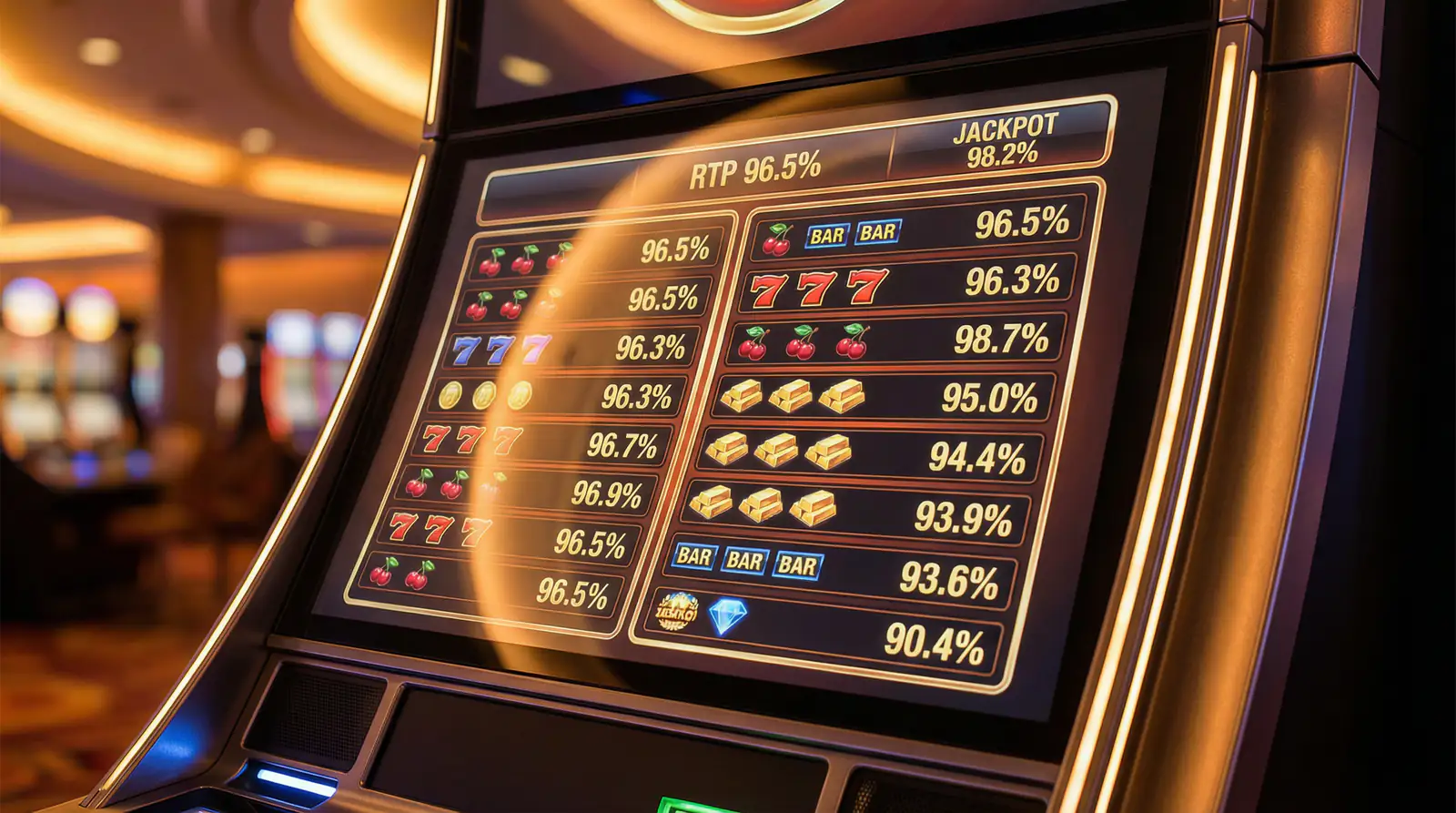
The confusion often arises from conflating these concepts. A 96% RTP slot does not return £96 for every £100 wagered in your session. It means that over millions of simulated spins, the game averages a 4% house edge. Your personal experience may diverge wildly from that average in either direction. Volatility determines how likely and how severe that divergence will be.
RTP Calculation Example
A slot with 96.5% RTP accepts £1,000,000 in wagers across all players over a period. The expected return to players is £965,000, leaving £35,000 as the house edge. This calculation applies to aggregate results, not individual sessions.
Offshore casinos typically do not alter RTP values compared to UK-licensed versions of the same game, though some providers offer configurable RTP bands that operators can select. Always check the paytable within the game itself to confirm the actual percentage. Assuming all versions are identical can lead to unpleasant surprises.
The practical takeaway is to choose slots with mathematics that match your session goals. High RTP reduces the expected loss over time. Low volatility smooths the session experience. Neither guarantees profits, and both describe probabilities rather than certainties.
What RTP Percentage Means
A 96% RTP means the house keeps 4p from every pound over millions of spins. That sentence captures the entire concept. The remaining 96p returns to players collectively, distributed unevenly across individual sessions. Some players win; most lose. The percentages describe the system, not your personal outcome.
Understanding RTP in Practice
Player wagers £500 across 500 spins at £1 each on a 96% RTP slot.
Expected mathematical return: £500 × 0.96 = £480.
Expected loss: £500 - £480 = £20.
Actual result: anywhere from £0 to £5,000+ depending on variance.
The expected value is negative, but individual session outcomes distribute across a wide range.
Why does a guaranteed house edge not matter to all players? Because gambling involves sessions, not infinite timelines. In any given session, you might beat the theoretical average substantially. The possibility of a positive session exists even with negative expected value, and that possibility is what keeps the activity entertaining. Expecting to win on average, however, misunderstands the mathematics.
RTP percentages typically range from 92% to 99% across online slots. Anything below 94% is poor value by industry standards. Most mainstream titles cluster between 95% and 97%. Progressive jackpots often run lower base RTP because the jackpot contribution is included in the return calculation despite being awarded to very few players.
Check the RTP in the game's information section before playing. The number is disclosed on every licensed slot, though finding it sometimes requires navigating nested menus.
Low, Medium and High Volatility
Volatility is about the shape of your session, not the final outcome. A low-volatility slot delivers frequent small wins that keep your balance stable. A high-volatility slot pays infrequently but in larger chunks when wins do arrive. The expected return over infinite play remains the same; the experience along the way differs dramatically.
Low volatility suits players with smaller bankrolls or those who prefer longer sessions without dramatic swings. Classic slots and many fruit-themed video slots fall into this category. The entertainment comes from steady activity rather than climactic bonus moments. You will rarely lose your entire balance quickly, but you will also rarely experience the adrenaline of a significant win.
High volatility appeals to players chasing large payouts who can tolerate extended losing streaks. Megaways slots, high-variance video slots like Dead or Alive II, and most bonus-buy games sit in this bracket. The session can feel tedious during base game spins, but a successful bonus round delivers multiples of your stake that lower-volatility games cannot match.
Medium volatility occupies the middle ground, offering moderate win frequency with reasonable upside. Many popular video slots target this profile as a compromise. Match the volatility to your bankroll and session expectations. Playing a high-volatility slot with a small balance invites early bust; playing a low-volatility slot expecting a big score invites boredom.
Bonuses and Promotions at Non-GamStop Slots
Offshore casinos compete harder on bonuses — here's what that looks like. The absence of UKGC restrictions allows operators to offer larger deposit matches, more free spins, and more aggressive promotional structures than UK-licensed competitors. This is not altruism; it is marketing. The bonuses attract players, and the wagering requirements ensure the house retains its edge over time.
The landscape includes welcome packages spreading across multiple deposits, standalone free spins offers, cashback programmes, and VIP schemes with escalating benefits. Each bonus type carries terms that determine its actual value. A 500% deposit match sounds generous until you notice the 60x wagering requirement attached. Reading the fine print is not optional; it is the only way to assess whether a bonus helps or hinders.
Bonus Terms Warning
Every bonus comes with wagering requirements, game restrictions, maximum bet limits during wagering, and withdrawal caps. A bonus that looks lucrative on the marketing page may deliver negligible actual value once you work through the conditions. Calculate the effective cost before accepting.
The following subsections break down the major bonus categories: welcome packages, free spins, and wagering requirements. Understanding each helps you identify which promotions offer genuine value and which function primarily as marketing tools.
Welcome Packages
First deposit matches often run 100% to 300% — sometimes higher. A 200% match on a £100 deposit gives you £300 in bonus funds to play with, tripling your starting balance. The headline figure impresses, and that is exactly the point. The actual value depends entirely on the terms attached.
Welcome packages typically spread across multiple deposits. A structure like 200% on the first deposit, 100% on the second, and 50% on the third distributes the bonus across a longer engagement period. Each tranche carries its own wagering requirement, which must be cleared before withdrawal. The cumulative effect can be favourable or punishing depending on the specific conditions.
Maximum bonus caps matter. A 300% match capped at £500 bonus funds limits the benefit regardless of your deposit size. Similarly, some packages require minimum deposits of £20 or £50 to activate. Reading the terms reveals whether the bonus suits your actual deposit habits.
Offshore casinos push welcome bonuses aggressively because player acquisition is their primary challenge. The offers are genuine in the sense that you receive the funds, but they are not gifts. The wagering requirements and terms ensure the casino expects to profit from bonus players over time.
Free Spins Offers
Free spins come in two flavours: no-deposit teasers and deposit rewards. No-deposit free spins arrive simply for registering, typically ranging from 10 to 50 spins on a specific slot. They require no financial commitment but carry steep wagering requirements and low maximum cashout limits. Think of them as demonstrations rather than genuine profit opportunities.
Deposit-linked free spins offer better terms. A common structure bundles 100 or 200 free spins with a deposit match, distributed over several days following your first deposit. The spins usually apply to selected slots chosen by the casino, often newer releases they want to promote. Wagering requirements typically sit lower than for cash bonuses, making the effective value higher.
Spin value varies. A free spin might be valued at £0.10, £0.20, or occasionally more. A package of 100 spins at £0.10 each represents £10 in theoretical stake value, not £10 in expected return. Calculate the actual stake value and compare it against the wagering requirement to assess true worth.
Always check which slots qualify for free spins and whether winnings convert to bonus funds or real cash. The distinction matters enormously for actual value. Some free spins offers restrict winnings to bonus balance requiring full wagering before withdrawal; others credit winnings as withdrawable cash with modest multiplier requirements.
Wagering Requirements Decoded
A 60x wagering requirement is a red flag, not an opportunity. Here is why. If you receive a £100 bonus with 60x wagering, you must place £6,000 in total bets before withdrawing any winnings derived from that bonus. At a 96% RTP slot, the expected loss from £6,000 in wagers is £240 — more than double the bonus value. The maths works against you.
Reasonable wagering requirements fall between 20x and 40x. At 30x, a £100 bonus requires £3,000 in wagers, with an expected loss of £120 at 96% RTP. You still lose value, but the bonus provides extended playtime and some chance of finishing ahead. Above 40x, bonuses become increasingly difficult to convert into real value.
Game weighting complicates the calculation further. Slots typically contribute 100% toward wagering, but table games may contribute 10% or 0%. If you prefer blackjack, most bonuses become nearly impossible to clear. Check whether your preferred games contribute fully before accepting any offer.
Other terms to scrutinise include maximum bet limits during wagering, time limits for completing requirements, and maximum withdrawal caps on bonus winnings. An attractive headline bonus can collapse into marginal value once all conditions are factored. The casinos design it this way deliberately.
Deposit and Withdrawal Methods
Bonuses get players through the door, but payment processing determines whether the experience remains practical. Offshore casinos operate outside the UK banking ecosystem, which creates both opportunities and friction.
Payment flexibility is one of the clearest advantages offshore casinos offer. The absence of UKGC restrictions means these operators accept methods banned on UK-licensed sites, including credit cards for gambling transactions, a practice prohibited in Britain since April 2020. Cryptocurrency support is widespread. E-wallets that stopped servicing UK gambling accounts often continue working with offshore operators.
Reliability varies considerably. Some payment channels work flawlessly; others encounter blocks from issuing banks or processors. A deposit method that succeeds today may fail next month if your bank updates its transaction screening. Building familiarity with multiple options protects against disruption.
Withdrawal processing varies significantly between operators. Some offshore casinos process cashouts within hours; others impose multi-day pending periods and manual reviews. The licensing jurisdiction influences this somewhat, with MGA-licensed operators generally maintaining faster standards than Curacao equivalents, but individual operator policy matters more than the licence alone.

Each payment category offers distinct advantages. Cryptocurrency provides speed and privacy. E-wallets offer a buffer between your bank and the casino. Cards and bank transfers deliver familiarity at the cost of potential blocking. The following sections examine each option in detail.
Cryptocurrency Options
Crypto withdrawals can clear in minutes, not days. This speed advantage drives much of cryptocurrency's popularity at offshore casinos. Bitcoin remains the most widely supported option, but Ethereum, Litecoin, Tether, and other coins appear regularly. Some operators function as crypto-native platforms, pricing everything in Bitcoin and processing fiat conversions only when necessary.
The privacy element appeals to players who prefer minimal documentation. Crypto deposits typically bypass the identity verification that card or bank transfers trigger. This is not anonymity — reputable operators still conduct KYC at withdrawal — but it reduces friction during initial play. For players uncomfortable sharing banking details with offshore entities, cryptocurrency offers a structural separation.
Volatility introduces risk. If you deposit Bitcoin and the price drops before withdrawal, your fiat-equivalent balance decreases regardless of gambling outcomes. Some players accept this exposure; others convert to stablecoins like Tether to maintain predictable value. The choice depends on your comfort with currency fluctuation on top of gambling variance.
Transaction fees vary by network and timing. Bitcoin fees spike during high-activity periods; Litecoin and Tether typically process cheaper. Factor the fee into your deposit and withdrawal calculations, especially for smaller amounts where the percentage impact becomes significant.
E-Wallet Solutions
E-wallets sit between your bank and the casino. This intermediary position provides several practical benefits. Your bank sees a transfer to Skrill or Neteller, not to a gambling operator. The e-wallet then forwards funds to the casino. This layering often bypasses bank-level gambling blocks and keeps transaction descriptions neutral on your statement.
Skrill and Neteller dominate the offshore casino market. Both services have long histories with gambling operators and maintain wide acceptance. Account setup requires identity verification, which some players find inconvenient but which also enables higher transaction limits and faster processing once established. MiFinity and ecoPayz offer alternatives with slightly different fee structures and regional strengths.
Fees apply at multiple stages. Funding your e-wallet may incur charges depending on your source method. Withdrawing from the e-wallet to your bank often carries a percentage fee. And currency conversion, if applicable, adds another layer. Calculate the total cost of a round trip before committing to a specific e-wallet as your primary method.
Withdrawal speeds from casinos to e-wallets typically beat card or bank options. Same-day processing is common, with funds available in your e-wallet account within hours. The subsequent transfer to your bank adds time, but the casino portion completes quickly.
Card and Bank Payments
UK banks sometimes block transactions to offshore operators. This is the primary friction point with traditional payment methods. Major banks have implemented gambling transaction screening that may decline deposits to non-UKGC casinos, either automatically or after review. The block is not universal or consistent; it depends on your bank, the specific operator, and sometimes on transaction timing.
Credit cards work at many offshore casinos, unlike UK-licensed sites where credit gambling is prohibited. For players who prefer credit-based play, this represents a significant difference. The risks of credit gambling — spending money you do not have, accumulating interest, chasing losses with borrowed funds — remain real regardless of the operator's location.
Debit cards and bank transfers face variable success rates. Some transactions process normally; others are declined. If your initial deposit attempt fails, trying a different card or waiting a day sometimes resolves the issue. Alternatively, switching to an e-wallet or crypto sidesteps the problem entirely.
Withdrawal to cards often requires that the card was used for deposit, and the amount cannot exceed your deposit total. Any winnings above your deposited sum must withdraw via an alternative method. Bank transfers for withdrawals work reliably but process slowly, often taking three to five business days to clear.
How to Identify Safe Non-GamStop Slots
Not every offshore casino deserves your trust — here's how to filter. The absence of UKGC oversight means the due diligence burden shifts to you. Legitimate offshore operators exist in significant numbers, but so do poorly run or outright predatory sites. Separating trustworthy casinos from problematic ones requires attention to specific indicators rather than marketing claims.
Essential Safety Checklist
- Valid gambling licence displayed in the footer with verifiable licence number.
- SSL encryption confirmed by padlock icon in browser address bar.
- Game fairness certification from recognised auditors (eCOGRA, iTech Labs, GLI).
- Responsive customer support reachable before you deposit.
- Positive reputation across multiple independent review sources.
- Transparent terms and conditions without predatory clauses.
The licence is the foundation. Curacao, Malta, and Gibraltar represent the primary offshore jurisdictions serving UK players. Each maintains different standards, with MGA generally considered the most rigorous and Curacao the most accessible for operators. A displayed licence number means nothing if you cannot verify it on the regulator's official website. Always check.
Beyond licensing, game fairness audits confirm that the random number generators produce legitimate results. Established auditors test slot mathematics independently and certify compliance. Casinos displaying eCOGRA or iTech Labs seals have submitted to external verification. This does not guarantee a perfect operator, but it establishes a baseline of seriousness.
Reputation matters because licensing alone does not predict payment reliability or customer service quality. Player reviews across gambling forums reveal patterns that licensing status cannot capture. A casino with valid licensing but consistent withdrawal complaints presents a different risk profile than one with clean reviews.

Licence Verification
A licence number should be verifiable on the regulator's website. This is the single most important check you can perform. Every legitimate gambling licence comes with a registration number that the issuing authority maintains in a public database. Curacao licences verify through the Curacao eGaming portal. MGA licences verify through the Malta Gaming Authority's licence search. Gibraltar licences verify through the Gibraltar Regulatory Authority.
The distinction between licence types matters. Curacao operates a master licence system where a primary holder may sublicense to multiple operators. This creates ambiguity because the displayed licence number may belong to the master holder rather than the specific casino. MGA and Gibraltar issue direct licences with clearer accountability.
In 2026, Malta remains the gold standard for offshore licensing. The MGA enforces player protection requirements, financial reserves, and operational standards that exceed Curacao's baseline. A Malta-licensed casino has passed more rigorous vetting than its Curacao-licensed equivalent. This does not guarantee excellence, but it establishes a higher floor.
Unlicensed operators exist and should be avoided entirely. If a casino displays no licence information, or if the displayed information does not verify against the regulator's records, you have no recourse if problems arise. The risk is not theoretical; unlicensed sites fold, withhold payments, and disappear with alarming regularity.
Game Fairness Audits
Third-party audits confirm that games aren't rigged. The slots at any casino run on random number generators that determine outcomes independently of player action or casino preference. The question is whether those RNGs actually function as claimed. Independent auditors answer this question by testing game mathematics and certifying compliance with stated RTP values.
eCOGRA is the most recognised name in gambling audits, operating since 2003. Their seal indicates that the casino has submitted to external review of game fairness, player protection policies, and responsible operator practices. iTech Labs and GLI (Gaming Laboratories International) offer similar services with slightly different emphases. BMM Testlabs handles certification for many Asian-market games.
The audit process involves analysing millions of simulated spins to verify that actual outcomes match the game's stated mathematics. A certified 96% RTP slot should return approximately 96% over the test sample. Significant deviation indicates manipulation or technical malfunction, both of which fail certification.
Look for audit seals in the casino footer or the game information sections. Clicking the seal should link to a verification page on the auditor's website. If the seal is static and unverifiable, treat it with suspicion. Legitimate operators have no reason to fake certification when real certification is readily available.
Warning Signs to Avoid
If withdrawal complaints dominate the reviews, walk away. Payment issues are the clearest indicator of a problematic operator. A casino that takes deposits quickly but delays withdrawals indefinitely, demands excessive documentation, or invents reasons to void winnings is not worth the risk regardless of its other qualities. Forum discussions and review aggregators reveal these patterns.
No verifiable licence is an absolute disqualifier. If the casino either displays no licence or the displayed licence does not check out against the regulator's database, you have no protection and no recourse. The games may be fair, the withdrawals may process, but you are operating on pure trust with no backstop.
Predatory bonus terms warrant caution. Wagering requirements above 50x, withdrawal caps below the bonus value, and terms that allow retroactive changes to conditions all indicate an operator prioritising extraction over relationship. These casinos rely on player ignorance rather than product quality.
Unresponsive customer support before you deposit predicts worse experiences after. Test the live chat or email response before committing significant funds. If the operator cannot answer basic questions promptly when trying to acquire you, expect worse service when you need help with problems.
Non-GamStop vs UKGC Slots: Direct Comparison
This isn't about which is 'better' — it's about which fits your priorities. UKGC-licensed slots operate under a framework designed for player protection, with restrictions that some players find frustrating. Non-GamStop slots operate under different frameworks with fewer restrictions, which some players find liberating and others find risky. The choice depends on what you value.
| Factor | UKGC-Licensed Slots | Non-GamStop Slots |
|---|---|---|
| Maximum Stake | £5 per spin cap under 2025 regulations | No cap; varies by operator, often £100-£500+ |
| Bonus Buy | Prohibited since 2019 | Available on applicable games |
| Autoplay | Removed or heavily restricted | Full functionality with configurable limits |
| Credit Cards | Banned for gambling since April 2020 (UKGC) | Accepted at most operators |
| Self-Exclusion | GamStop integration mandatory | Not connected to GamStop |
| Dispute Resolution | UKGC-approved ADR schemes | Varies by licence; MGA offers ADR, Curacao less consistent |
| Bonus Wagering | Typically 30-40x, strict limits | Wide range, often 35-60x |
| Crypto Payments | Generally not supported | Widely available |
| Verification | Mandatory KYC and affordability checks | KYC at withdrawal; no affordability checks |
The UKGC framework prioritises harm reduction, sometimes at the cost of player convenience and choice. The Gambling Commission's 2026 white paper proposals continue this trajectory with additional stake limits and affordability measures under consideration. Non-GamStop sites offer the pre-regulation experience that some players prefer, accepting the reduced consumer protection as a trade-off.
Neither environment is objectively superior. A player who values strict self-exclusion tools, dispute resolution channels, and regulatory oversight benefits from UKGC sites despite the restrictions. A player who finds the restrictions insulting and prefers to manage their own limits may find offshore options more suitable. Know what matters to you before choosing.
Most Popular Slots Without GamStop
These titles consistently top the charts at offshore casinos. The popularity reflects quality, marketing, and player familiarity — the same games that dominate UK sites succeed internationally. What changes is feature access. Playing Book of Dead at an offshore casino feels identical to the UK version until you notice the bonus buy option that British players cannot use.
Book of Dead
Play'n GO's Egyptian adventure with expanding symbols during free spins. 96.21% RTP, high volatility. The benchmark for the book-style slot genre.
Gates of Olympus
Pragmatic Play's tumble-mechanic slot with escalating multipliers. 96.5% RTP, high volatility. Bonus buy available offshore.
Sweet Bonanza
Candy-themed cluster pays with multiplier bombs. 96.51% RTP, medium-high volatility. Colourful, accessible, and heavily promoted.
Starburst
NetEnt's evergreen classic with expanding wilds and simple mechanics. 96.09% RTP, low volatility. Remains popular despite its age.
Big Bass Bonanza
Fishing-themed slot with money symbols and multiplying collectors. 96.71% RTP, high volatility. Spawned numerous sequels.
Dead or Alive II
NetEnt's western sequel with extreme volatility and sticky wilds. 96.82% RTP. Known for massive max win potential.
Mega Moolah
Microgaming's legendary progressive jackpot. Lower base RTP but seven-figure jackpot potential. Network-linked across operators.
Wolf Gold
Pragmatic Play's nature-themed slot with money respins and jackpots. 96.01% RTP, medium volatility. Reliable performer.
These slots succeed because they balance entertainment value with mathematical appeal. High RTPs, engaging bonus rounds, and fair volatility distribution keep players returning. At offshore casinos, the same games with unlocked features create marginally different experiences. The core quality that made these titles popular on UK sites translates directly.
Beyond the established hits, offshore casinos often feature newer releases earlier than UK sites, sometimes before UKGC-compliant versions exist. Players interested in the latest slot developments can access games at offshore operators while British-licensed sites complete their regulatory approval processes.
Responsible Gambling Without GamStop
Playing outside GamStop means managing your own limits. The tools that UKGC sites must provide — deposit caps, reality checks, cooling-off periods — exist at many offshore casinos but are not mandatory. Whether they are available and whether you use them becomes your responsibility rather than a regulatory requirement.
Self-Exclusion Alternatives
If you registered with GamStop because you needed help controlling gambling, playing at non-GamStop sites may not be in your best interest. Consider whether circumventing self-exclusion addresses your actual needs or simply delays confronting them. Support organisations like GamCare, Gamblers Anonymous, and the National Gambling Helpline (0808 8020 133) offer confidential assistance regardless of where you play.
Practical self-management starts before you play. Decide your session bankroll in advance, separate it from funds needed for other purposes, and stop when it's gone. Set time limits and honour them. Avoid chasing losses with larger bets or extended sessions. These principles are basic because the fundamentals matter more than elaborate strategies.
Many offshore casinos offer optional tools: deposit limits, loss limits, session time reminders, and self-exclusion at the operator level. Use them if they help. The absence of mandatory enforcement means the tools work only if you engage with them. If you find yourself repeatedly overriding your own limits, that pattern carries information worth acknowledging.
Gambling should remain entertainment. The moment it becomes a source of stress, financial pressure, or relationship strain, the cost exceeds any benefit. Taking breaks, re-evaluating your play, and seeking external perspective are not signs of weakness. They are responsible behaviours that distinguish sustainable gambling from problematic patterns.
Frequently Asked Questions
Are slots not on GamStop legal for UK players?
Yes, it is legal for UK residents to play slots at offshore casinos not registered with GamStop. These sites operate under licences from jurisdictions like Curacao, Malta, or Gibraltar. While they are not regulated by the UK Gambling Commission, they are not illegal to access. The legal burden falls on operators, not players. UKGC rules prohibit unlicensed operators from actively marketing to UK customers, but the act of playing itself carries no criminal or civil penalty for the individual. However, you will not have the same level of consumer protection as with UKGC-licensed sites, including access to UK dispute resolution services and mandatory responsible gambling tools.
How can I verify that a non-GamStop slot site is safe and fair?
To verify safety, check for a valid gambling licence displayed in the footer and verify the licence number on the regulator's official website. Curacao licences verify through the Curacao eGaming portal; MGA licences verify through the Malta Gaming Authority's licence search. Look for game fairness certifications from independent auditors like eCOGRA, iTech Labs, or GLI — clicking their seals should link to verification pages. Read player reviews on gambling forums to identify patterns in withdrawal processing and customer service. Check for SSL encryption indicated by the padlock icon in your browser. Test customer support responsiveness before depositing significant amounts. A legitimate operator will pass all of these checks; failure on any one warrants caution.
What are the main differences between UKGC-regulated and offshore slots?
The key differences include betting limits, where UKGC caps stakes at £5 per spin while offshore has no limit; features, where bonus buy, autoplay, and turbo spins are banned on UKGC sites but available offshore; payment methods, where offshore accepts crypto and credit cards banned in the UK; bonuses, where offshore offers larger welcome packages though often with higher wagering requirements; and player protection, where UKGC provides stronger dispute resolution through approved ADR schemes and mandatory GamStop integration, while offshore varies significantly by licence quality. The games themselves come from the same providers and use identical RNG mechanics — the differences lie in the regulatory framework and playing conditions rather than the underlying mathematics.
The Unrestricted Reels: What Comes Next
Freedom without structure demands something from you. The offshore slot market offers access to games, features, and stakes that UK regulation has curtailed, but it provides little scaffolding to prevent the downsides those regulations aim to address. You gain options; you lose guardrails. Whether that trade-off suits you depends on honest self-assessment rather than wishful thinking.
The market itself continues evolving. UK regulatory pressure shows no signs of easing, with the Gambling Commission's ongoing review proposing additional restrictions that may further drive players toward offshore options. Meanwhile, the quality gap between UKGC and offshore casinos narrows as legitimate international operators invest in technology, licensing, and player experience. The binary choice between trusted UK sites and sketchy alternatives no longer captures reality.
If you choose to play slots without GamStop, do so with full awareness. Verify licensing. Check audits. Read reviews. Set limits you will actually respect. Treat bonuses as marketing, not gifts. And recognise when the entertainment value no longer justifies the cost. These are not optional extras for careful players; they are baseline requirements for anyone operating outside the protective framework that UK licensing provides.
The reels spin the same mathematics regardless of jurisdiction. What changes is the environment around them. Choose yours deliberately.